
Trezor.io/Start® — Starting Up Your Device | Trezor®
Trezor.io/start gives new Trezor users a convenient setup route, covering software access, hardware configuration, wallet preparation, and supported crypto transfers.
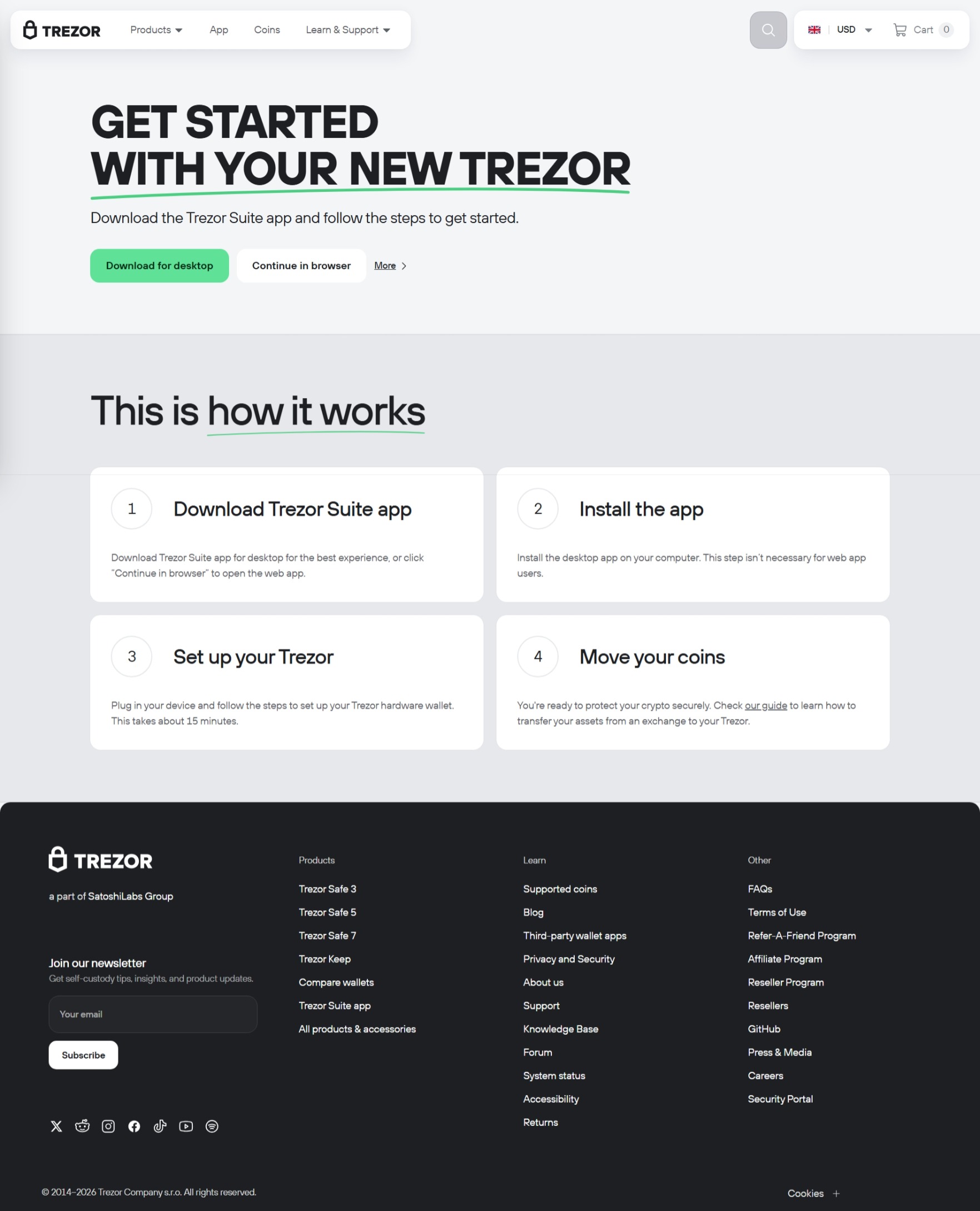
Trezor.io/start: Learn the Basics Before Managing Crypto
A new hardware wallet can introduce several concepts that are unfamiliar to first-time users. Trezor.io/start gives users a starting point for preparing a compatible Trezor device while becoming more comfortable with secure cryptocurrency management.
Learning the basics before making important transactions can make the overall experience more straightforward and help reduce avoidable errors.
Know Where to Begin
Use trusted Trezor resources when starting the setup process. Be cautious with websites that appear in advertisements or messages promising instant wallet support.
Scammers may create convincing copies of wallet websites, so always check the source before downloading software or entering information.
Take Your Time During Setup
Follow the instructions for your specific hardware wallet carefully. Do not skip security prompts simply because you want to complete the setup faster.
When the device provides important information, read it carefully and make sure it matches the instructions you are following. If something looks unusual, stop and verify the source before continuing.
Keep Recovery Information Offline
One of the most important lessons in self-custody is protecting your recovery information. If your device generates recovery words, record them using the recommended process and store them securely offline.
Never share these words with another person. A legitimate support representative should not ask you to disclose them. Avoid putting recovery words into websites, cloud storage, email, screenshots, or chat applications.
Practice Before Larger Transactions
Once your wallet is ready, learn the basic workflow by reviewing your accounts and transaction history. When you are ready to send cryptocurrency, carefully inspect the recipient address and amount.
Use the hardware device to review transaction information when prompted. Confirm only when the details match your intended action.
Build Long-Term Security Habits
Good security is an ongoing process. Keep your wallet device protected, use trusted software sources, and remain skeptical of unexpected messages requesting wallet information.
Learning to recognize phishing attempts is just as important as learning the wallet interface.
Final Thoughts
Trezor.io/start offers a practical beginning for users setting up a compatible Trezor hardware wallet. Understanding the setup process, protecting recovery information, and verifying transactions can help create a more careful and confident approach to crypto self-custody.
Updated about 6 hours ago